
The London School of Economics and Political Science, or LSE for short, is a social science focussed university based in London and is one of the best in the world. The London Business School or LBS as it’s commonly known, is one of the best and a consistently highly ranked business school in the world. If you’re looking at studying business or management in London, one of these two is the place for you, and we are here to help you choose the right one.
Key Takeaways
- LSE is a top global social science university, while LBS is a specialized postgraduate business school.
- LSE offers undergraduate and postgraduate programs, while LBS offers only postgraduate business programs.
- LSE acceptance rate is roughly around 9%, making it extremely selective.
- LBS MBA acceptance rates are estimated around 20–25% depending on the program.
- LBS graduates often enter consulting, finance, and tech sectors with high salaries.
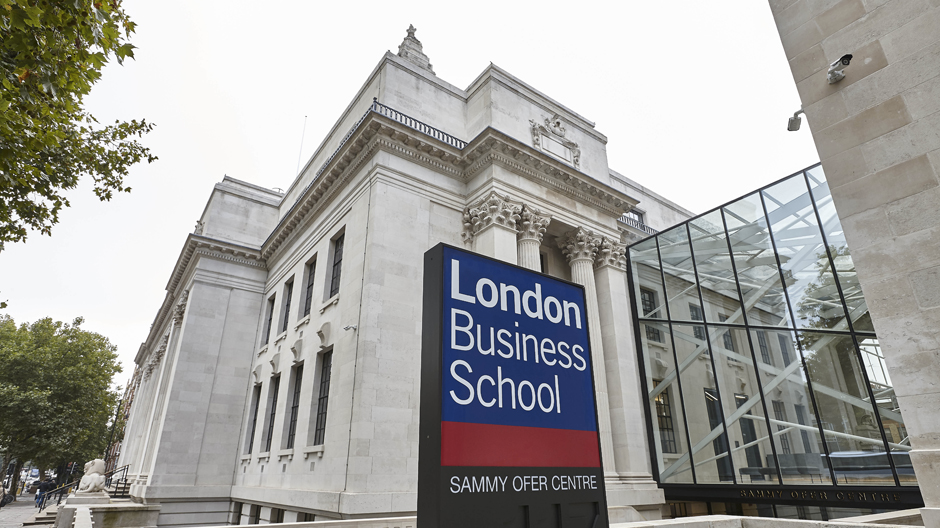
LSE vs London Business School: Which One Should You Choose?
London is home to two of the most prestigious institutions for studying business and economics: London School of Economics and Political Science (LSE) and London Business School (LBS).
Both institutions attract students from around the world, but they serve different types of students and career goals.
- LSE is a leading social sciences university
- LBS is a specialized postgraduate business school
Understanding the differences between these institutions can help you decide which one is the best fit for your academic and career ambitions.
London School of Economics vs London Business School Comparison
Feature | LSE | London Business School |
Founded | 1895 | 1964 |
Type | Public research university | Postgraduate business school |
Programs | Undergraduate & Postgraduate | Postgraduate only |
Acceptance Rate | ~9% | ~20% (MBA approx.) |
International Students | ~64% | ~81% |
Location | Central London | Regent’s Park, London |
Student Clubs | 250+ | 90+ |
Ranking | Top global social science university | Top business school globally |

Overview of London School of Economics
The London School of Economics and Political Science is one of the world’s leading universities focused on social sciences.
Founded in 1895 by Sidney Webb, Beatrice Webb, Graham Wallas, and George Bernard Shaw, the institution quickly became one of the most influential universities for economics, politics, law, and international relations.
Key highlights:
- Over 180 graduate programs
- More than 250 student clubs
- Strong focus on economics, politics, and finance
LSE is particularly famous for producing global leaders, policymakers, and economists.
Notable alumni include:
- George Soros
- Cherie Blair
- John F. Kennedy (attended briefly)
Overview of London Business School
London Business School is one of the top-ranked business schools in the world, focusing exclusively on graduate-level business education.
Founded in 1964, LBS is located near Regent’s Park in London and attracts a highly international student body.
Key highlights:
- Over 90% international students
- Partnerships with top global institutions
- Highly flexible MBA program
The school is especially known for its MBA, Masters in Finance, and Masters in Management programs.
Rankings Comparison
Ranking System | LSE | London Business School |
QS World University Ranking | #50 globally | Top 3 globally for business studies |
Guardian UK Ranking | #4 | N/A |
Times Higher Education | #46 | N/A |
Programs Comparison
Category | LSE | LBS |
Undergraduate Degrees | Yes | No |
MBA | No | Yes |
Masters in Management | Yes | Yes |
Masters in Finance | Yes | Yes |
Executive Programs | Limited | Extensive |
Admissions & Acceptance Rates
Admissions at both institutions are highly competitive.
LSE Admissions
- Applications via UCAS
- Requires strong academic performance
- Highly selective programs like BSc Economics
Recent data shows around 16 applicants per place for undergraduate programs.
LBS Admissions
LBS evaluates candidates based on:
- GMAT/GRE scores
- Work experience
- Leadership potential
- Interview performance
The estimated MBA acceptance rate is around 20–25% depending on the cohort.
Tuition Fees Comparison
Program | LSE | LBS |
Undergraduate | £28k–£35k (international) | Not offered |
Masters | £28k–£48k | £45k–£65k |
MBA | N/A | £119,950 |
Career Outcomes
London Business School has excellent career outcomes.
Key statistics:
- 87% of MBA graduates receive offers within 3 months
- Average salary around $116,000+ after graduation.
Top hiring industries include:
- Consulting
- Finance
- Technology
Major employers include Deloitte, Bain Capital, and Blackstone.
HOW CAN WE HELP?
We at Rostrum can help you make the best decision based on your needs and ambitions. We can handhold you through the entire process, right from your testing prep to finding the right schools, from the application process to the interviews. Book a free consultation today to get started!
LSE certainly has a stronger reputation and is more academically inclined, while LBS programs are more professionally designed to suit the commercial market needs.
Summary
The London School of Economics (LSE) and London Business School (LBS) are two of the most prestigious institutions in London for studying business and economics. LSE is a globally recognized university specializing in social sciences and offers both undergraduate and postgraduate programs. London Business School, founded in 1964, focuses exclusively on postgraduate business education such as MBA and finance degrees. LSE has an acceptance rate of around 9%, while LBS MBA programs accept roughly 20–25% of applicants. Students seeking research-driven economics education often choose LSE, while professionals aiming for global business careers typically choose London Business School.
FAQs
Is LSE better than London Business School?
LSE is better for economics, politics, and undergraduate studies, while London Business School is stronger for MBA and executive business education.
Does LSE offer an MBA?
No, LSE does not offer a traditional MBA program. Students typically pursue MSc programs in finance, management, or economics instead.
Is London Business School prestigious?
Yes. LBS consistently ranks among the top business schools globally, especially for MBA and finance programs.
Which school has a higher acceptance rate?
London Business School generally has a higher acceptance rate (~20–25%) compared with LSE (~9%).
Can international students apply to both schools?
Yes. Both institutions attract large numbers of international students and offer multiple scholarships and support programs.
Author
-
An alumnus of the London School of Economics and Political Science and a former consultant at PwC, Yatharth has empowered over 2,000 students from more than 20 countries to secure admissions at top institutions, including those in the Ivy League and University of Oxford and University of Cambridge.
View all posts
