
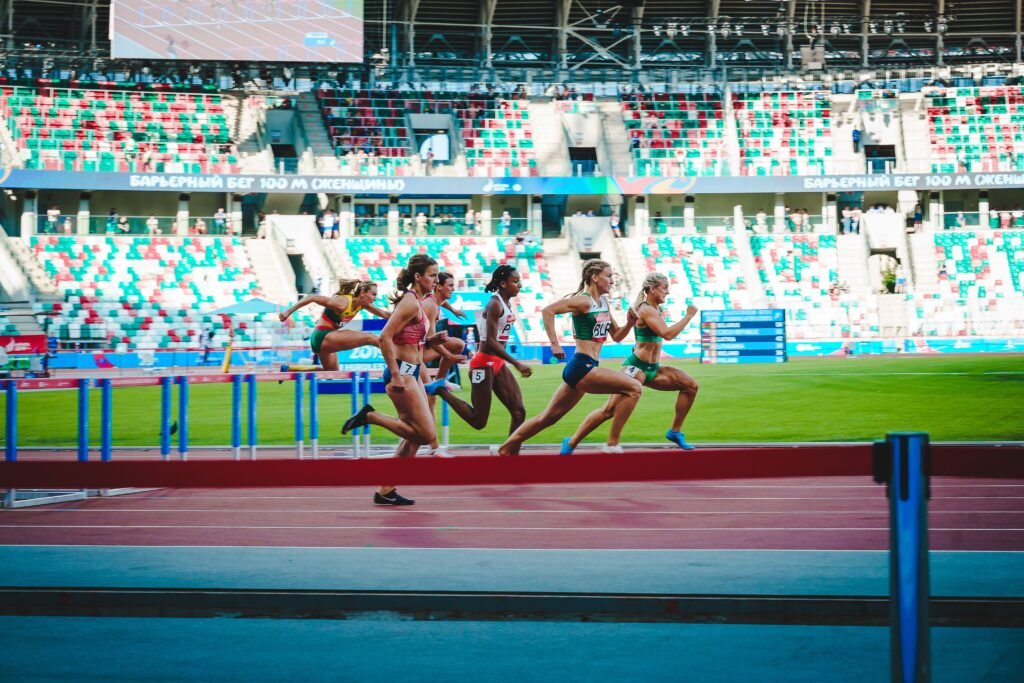
Introduction to Athletic Recruitment:
Recruiting in the United States is a very competitive process. Sports are a lot more to many students than just an extracurricular activity. It can be a significant part of their school experience for years of early morning training sessions, weekend competitions, national tournaments and many hours of practice. These experiences can also pave the way to college for some. The organisation and financing of university sports in the United States is one of the most structured and well-funded in the world. Thousands of student-athletes get opportunities to play at American universities while attending school for their undergraduate degrees every year. Some are offered a partial or full athletic scholarship, and others are recruited due to their athletic prowess and ability to contribute to the teams at college.
Table of Contents
Athletic recruitment is often misunderstood. Many families assume that strong athletic performance alone leads to scholarships or that coaches will automatically discover talented athletes through competitions or social media. In reality, recruitment is a highly competitive and strategic process where academics, eligibility, communication skills and proactive outreach all play a crucial role. Unlike many countries where sport and higher education operate separately, athletics are deeply integrated into the US university system.
Universities invest heavily in sports programmes, facilities, coaching and athlete development, creating unique opportunities for students to compete at a high level while earning a globally recognised degree. Understanding the recruitment process early can significantly improve a student’s chances of finding the right university fit. This guide explores how athletic recruitment works, how coaches identify and evaluate athletes, scholarship opportunities, eligibility requirements, recruitment timelines and the key differences across college athletic divisions.

The importance of Athletic Recruitment:
The United States is one of the world’s biggest collegiate sports systems, with hundreds of thousands of student-athletes playing in thousands of universities. In contrast to professional sports academies, American colleges and universities see sports as a part of the university experience. Students should have a balance between competitive sport and academic studies, leadership and personal development. There are several advantages to having great athletes on board for universities.
Athletic programmes affect the reputation of the school, alumni involvement, student recruiting, media coverage, and school spirit. Therefore, universities invest heavily in the process of determining who they can recruit as a player and a student. There are several benefits to athletic recruitment for students other than receiving a scholarship.
There are a number of universities that actively seek students of varying levels of competition. Depending on the institution, coaches will seek out nationally ranked players, regional players, or students with long-term potential and work ethics. It’s not about which programme is the “best” university, but which programme is the “best” for the student’s athletic ability, academic goals and personal goals.
What is Athletic Recruitment?
Athletic recruitment is the process a university coach uses to recruit, evaluate and recruit student athletes to their team. Recruitment is different from regular university admissions because it entails two closely related evaluations:
1. Academic Evaluation:
Admissions offices determine if a student is academically prepared for the university, based on grades, coursework, standardised tests (if applicable), English language proficiency (for international students), and academic preparedness.
2. Athletic Evaluation:
The coach determines if a student has the necessary skills, physical attributes, competitive experience and potential to contribute to the team. Typically, a successful recruit needs to meet both criteria. Academic requirements are not waived for admission due to being an outstanding athlete. Likewise, if someone has great grades and they don’t show athletic ability, they will not be recruited athletically.


Why Start Early?
Athletic recruiting has one of the largest misconceptions, which is that students should start preparing in their final year of high school. In fact, many effective recruits start developing their athletic profiles several years prior.
Students can:
- Maintain good grades.
- Improve sports abilities by playing regularly.
- Develop relationships with coaches.
- Create highlight videos of the competition.
- Participate in recruiting showcases and camps.
- Understand eligibility requirements.
- Look into research universities that have academic and athletic interests.
Understanding the NCAA
The National Collegiate Athletic Association (NCAA) is the name that comes to mind when talking about college sports in the United States. Intercollegiate athletics is regulated by the NCAA for over a thousand colleges in the United States. It sets the eligibility requirements, recruitment guidelines, academic requirements, competition timetables and championship formats for dozens of sports.
It has the following main goals:
- Ensuring fair competition.
- Protecting student-athlete welfare.
- Maintaining academic standards.
- Regulating recruitment practices.
- Organising national championships.
The NCAA is the largest governing body, but it isn’t the only one available to student athletes. There are also competitive collegiate opportunities at other organisations, including National Association of Intercollegiate Athletics (NAIA) and the National Junior College Athletic Association (NJCAA). Students can use this information to determine which programmes would be best suited to their athletic and academic profile.
NCAA Divisions Explained
One of the biggest misconceptions about college athletics is that Division I is automatically the best option for every student-athlete. In reality, each NCAA division offers a different balance of competition, academics, scholarships and campus life. The right fit depends on a student’s athletic ability, academic goals, career aspirations and the kind of college experience they want.
Division I (NCAA DI)
Division I represents the highest level of collegiate athletics in the United States. These universities invest heavily in their athletic programmes, offering world-class training facilities, full-time coaching staff, advanced sports science support and opportunities to compete on nationally recognised stages.
Many Division I athletes have competed at national or international level before university, and for sports such as basketball, soccer, baseball, golf, swimming and track & field, Division I can provide a pathway to professional competition.
However, competing at this level requires an exceptional level of commitment. Student athletes must balance demanding training schedules, frequent travel, competitions and academic responsibilities throughout the year.
Division I is often the right fit for students who:
- Compete at a national or international level.
- Aspire to play professionally.
- Thrive in highly competitive environments.
- Can successfully manage rigorous athletic and academic commitments.
Division II (NCAA DII)
Division II offers a strong balance between competitive athletics and academic life. While the level of competition remains high, student-athletes often have greater flexibility to engage in internships, research, leadership opportunities and campus activities alongside their sport.
Many Division II universities provide athletic scholarships, experienced coaching staff and excellent training facilities, while typically offering a more close-knit campus environment than many Division I institutions. For many international students, Division II provides an ideal combination of competitive sport and a well-rounded university experience.
Division III (NCAA DIII)
Division III places academics and the overall student experience at the centre of university life. Athletic scholarships are not offered, but students may still receive generous merit based, academic or need-based financial aid.
Although athletics remain highly competitive, sport is designed to complement rather than dominate university life. Division III is an excellent option for students who want to continue competing while prioritising academics, undergraduate research, leadership opportunities or preparation for graduate study. Many of the United States’ leading liberal arts colleges compete in Division III.
NAIA
Another set of American universities is governed by the National Association of Intercollegiate Athletics (NAIA).
Smaller than the NCAA, NAIA schools may offer:
- Athletic scholarships.
- Flexible recruitment timelines.
- Smaller class sizes.
- Strong academic support.
- Competitive athletic programmes.
NAIA universities offer a great opportunity for many international students, especially when the recruiting process is very competitive in the NCAA.
Junior Colleges (NJCAA)
Junior colleges provide two-year associate degree programmes and competitive athletic opportunities through the National Junior College Athletic Association (NJCAA).
This is a popular path for many athletes to take:
- Improve academic records.
- Continue athletic development.
- Develop more competitive experience.
- Transfer to 4-year universities later.
Junior colleges are a stepping stone for some students to NCAA Division I or II programmes.
The NCAA Eligibility Centre
Students who wish to play at NCAA Division I or NCAA Division II schools will typically need to enrol in the NCAA Eligibility Centre. The Eligibility Centre is a database that determines the academic and amateur eligibility of prospective student-athletes before they play in college athletics.
Students typically submit:
- Academic transcripts.
- Course information.
- Graduation details.
- Amateur status declarations.
Depending on the educational system of the country, international students might require extra documentation. Early registration eliminates needless delays in the admissions process.
Athletic Scholarships: What are the various types of athletic scholarships?
Many students are seeking to pursue athletic recruitment because of the potential for financial aid. But athletic scholarships are not always as they are perceived. Many families believe that all recruited athletes are given a “full ride”. In fact, the structure of scholarships is different for every sport, university, athletic division and coach’s budget. Knowing how scholarships work will help students to have realistic expectations and to make informed decisions.
1. Full Athletic Scholarships:
Full athletic scholarships, or full rides, usually pay for a player’s tuition, fees, room and board, and other college expenses. Full scholarships are typically for athletes in sports where universities can offer full scholarships to a select few athletes. Scholarships are competitive and typically go to athletes who have shown outstanding performance at the national or international level.
2. Partial Athletic Scholarships:
Many college athletes do not receive a full scholarship. A partial scholarship can be a percentage of tuition or a fixed amount of financial aid for the university. A large number of students receive athletic scholarships, academic merit scholarships, need-based financial aid, institutional grants and international student awards. The financial package may make university attendance much more affordable, especially when all of the above is included.
3. Head-Count and Equivalency Sports:
Head-Count Sports: This type of sport also influences the distribution of scholarships. Some sports allow a select few athletes to receive full scholarships.
Examples often include:
- Basketball
- American Football (FBS)
- Women’s Volleyball
- Women’s Gymnastics
- Women’s Tennis
Usually, in these sports, the scholarship is given to one athlete and not split between several.
Equivalency Sports: The majority of NCAA sports are based on an equivalency model. Coaches don’t give out all the scholarship money to one player; they split a limited amount of scholarship money between a number of players. This enables them to hire bigger staff and provide various amounts of monetary support.
Typical sports that are eligible for equivalency scholarships include:
- Soccer
- Swimming
- Golf
- Tennis
- Track and Field
- Baseball
- Softball
- Rowing
- Cross Country
Therefore, the athlete should not assume that a partial scholarship is an indication that they were not considered as valuable. It’s just a matter of how the scholarship money is distributed in that sport.
In addition to Scholarships, there are NIL opportunities available. The world of collegiate athletics has undergone a major transformation in recent years, thanks to the emergence of Name, Image, and Likeness (NIL) policies (NCSA). NIL allows eligible college students to monetise their name, image and likeness while they are still in school. Examples include:
- Brand sponsorships
- Social media partnerships
- Coaching clinics
- Merchandise sales
- Public appearances
- Autograph sessions
The opportunities and size of NIL opportunities are very different across various sports, universities, marketability, and audience. NIL is an extra means for many students to build entrepreneurial skills in addition to their athletic careers.
National Letters of Intent and Verbal Commitments
Students may get verbal offers from coaches as the recruitment process continues. A verbal commitment is an informal agreement that both the athlete and coach are committed to working together. However, verbal agreements are not usually binding.
For the formal stage, a National Letter of Intent (NLI) or other institutional agreement is typically signed, depending on the athletic association and university. This document verifies the student’s commitment to attend the institution and the university’s commitment to offer agreed financial support (if applicable). Students should be sure to read the scholarship terms and academic expectations before entering into any contract.
Recruitment for International Students
The participation of international student-athletes in collegiate sports in the United States is a growing trend. Athletes from India, Australia, Canada, the United Kingdom, South Africa and many European countries are actively recruited by many American universities. Consequently, they must give more information to support coaches’ assessment of their potential.
When recruiting internationally, focus on:
- Producing professional highlight videos.
- Keeping detailed records of competitions.
- Interpretation of academic texts as needed.
- Communicating regularly with coaches.
- Proving English language skills.
- Understanding visa requirements.
- Reading and learning about university admissions.
International athletes are appreciated by many universities due to their diverse experiences, different playing styles, and wider competitive exposure.
What Parents Should Know
Parents can be a key part of the recruitment process. They can assist students to stay organised, motivated and realistic throughout the process, which is often a long one.
Parents can help by:
- Promoting academic achievement and athletic development.
- Assisting students in researching Universities.
- Participating in competitions and recruitment.
- Carefully considering scholarship offers.
- Facilitating communication with coaches and enabling students to lead the way.
- To promote a balanced decision-making process, not just one based on athletics.
Most of all, parents should keep in mind that university is an educational and personal journey. Selecting a school for the scholarship amount or for its athletic reputation may not always be the most advantageous choice.
Action Steps
Those who are interested in athletic recruitment should start preparing long before they apply to college. Some of the practical measures are:
- Find out about research universities that have your chosen academic programme and sport.
- Spend time in high school earning good grades.
- Regularly compete in competitive activities.
- Capture quality competition video.
- Create a professional athletic resume.
- Make a short highlight video.
- Contact coaches with personalised emails.
- If applying to Division I or II programmes, register with the NCAA Eligibility Centre.
- Participate in identification camps and/or showcase events as appropriate.
- Research scholarship offers in conjunction with academic opportunities and campus culture.
Final Note
Athletic recruitment is about much more than earning a scholarship. It is a chance to combine higher education and competitive sport, and to build skills that are much more than just on the field. Successful recruits are not just good athletes. They are students who are disciplined, resilient, committed to their studies, good communicators, and self-managers of their recruitment process. The process for parents may seem daunting, but with careful planning and smart choices, it can make a big difference. Families should not only look at the programs and scholarships, but also at the environment in which the student can grow and succeed in school, athletics, and personal growth.
There is no one way to succeed. Some athletes play in Division 1 and go on to a professional career. Others find excellent academic programs at the Division II, Division III, NAIA or junior college level and then transfer to four-year programs. Every path has its own distinct benefits based on the student’s objectives and situation. After all, universities are not just hiring athletes; they’re hiring students who will be part of their campus community, uphold academic standards and represent their institution with integrity. The key pillars of a successful recruitment journey are still strong academic performance, consistent athletic performance, thoughtful preparation and genuine enthusiasm for learning.
Athletic recruitment can be one of the most fulfilling avenues for studying in the United States for students who are willing to take the time to understand the process and present themselves well.
Dreaming of Playing College Sports in the USA?
FAQs

1. When should I start the athletic recruitment process?
It’s best to start as early as possible, ideally during the first years of high school. Early preparation gives students time to improve their athletic performance, maintain strong grades, create highlight videos, attend showcases, and build relationships with college coaches.
2. Can international students receive athletic scholarships in the United States?
Yes. Many U.S. colleges actively recruit international student-athletes and offer athletic scholarships. However, scholarships vary by sport, division, and institution, and students must also meet academic and eligibility requirements.
3. Do all recruited athletes receive full scholarships?
No. Full athletic scholarships are relatively rare and highly competitive. Many student athletes receive partial athletic scholarships, which can be combined with academic scholarships, grants, and other forms of financial aid to reduce overall costs.
4. What do college coaches look for during recruitment?
Coaches evaluate more than athletic ability. They consider academic performance, competition history, work ethic, character, communication skills, leadership potential, and whether the student is a good fit for the team’s culture and goals.
Author
-

Sabika Owais is a Counselling Associate at Rostrum Education, where she works closely with students to navigate higher education opportunities with clarity and confidence. With a five-year academic background from Amity University and Jamia Hamdard University in International Relations, Sabika has developed a strong focus on global politics, public discourse, and the evolving dynamics of peace and conflict studies.
A Merit Scholar awardee from Jamia Hamdard, Sabika brings both academic rigor and critical insight to her work. Her academic journey has been shaped by a deep curiosity about international affairs, social justice, political communication, and the ways in which policy and power intersect across societies.
Before joining Rostrum, Sabika gained experience in research and writing roles, including internships and feature-writing opportunities where she worked on articles related to international politics, gender, conflict, and public policy. She focuses on intellectual depth, critical thinking and authentic self-expression.
View all posts