For most Indian postgraduate aspirants, the default roadmap often leads straight to the “Big Four”: the USA, UK, Canada, and Australia. However, at Rostrum Education, we have observed a significant continental pivot. While the traditional Anglosphere remains prestigious, rising tuition fees and cost of living crises are pushing savvy students toward a different frontier: Continental Europe.
Earlier, the study abroad conversation revolved around getting the best experience with an emphasis on the prestige and rankings of the top universities. But now it has shifted to students asking, “How quickly can I recover my investment? Instead of chasing university prestige, students are now choosing the universities justifying the educational loans to reduce the financial risks that the families had to undergo.
Specifically, Germany and the Netherlands have emerged as strategic ROI destinations. By combining world class academic standards with lower cost tuition and favorable stay back policies, these nations offer a financial break even point that the US and UK simply cannot match.
Table of Contents
The Shifting Tuition Landscape in Germany
The most famous draw for Germany has historically been its no tuition policy. While this remains true for the vast majority of public universities, the landscape is becoming more nuanced in 2026.
The Introduction of International Fees
It is a common misconception that all education in Germany is free for everyone. Two major states have now introduced tuition fees for non EU/EEA students:
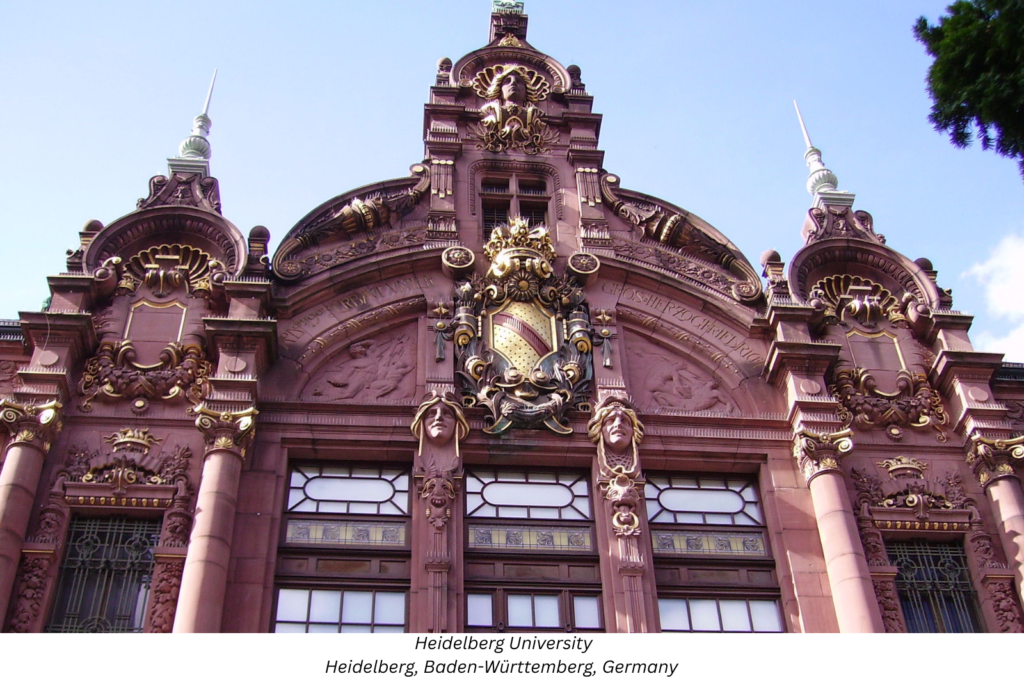
Baden Württemberg: Since 2017, public universities in this state (including top tier schools like Heidelberg University and University of Stuttgart) charge approximately €1,500 per semester.
Bavaria: As of the Winter Semester 2024/25, theTechnical University of Munich (TUM) has introduced tuition fees for international students from non EU countries, ranging from €2,000 to €6,000 per semester depending on the program.
The Remaining “Free” Core
Despite these shifts, public universities in the remaining 14 German states (such as Berlin, North Rhine Westphalia, and Hamburg) still charge zero tuition for most Master’s programs. Students only pay a “Semester Contribution” of roughly €150 – €400, which covers administrative costs and a public transport pass.
The Language Hurdle: Fact Checking Proficiency Requirements
A critical area of confusion for Indian students is the language requirement. Does “English taught” really mean “English only”?
For Admission
If you apply for an English taught Master’s program, the primary requirement is proof of English proficiency (IELTS/TOEFL). However, many public universities, especially for technical or social science degrees, now require a basic level of German (usually A1 or A2) even for English programs to ensure students can handle administrative tasks. For German taught programs, a C1 level (TestDaF or DSH) is mandatory according to DAAD.
For Post Study Work
While you can study in English, the German job market remains significantly German centric. According to theFederal Government’s Make it in Germany portal, while tech and research sectors often operate in English, long term career growth and social integration generally require at least a B2 level of German.
The Netherlands: English Proficiency and the “Zoekjaar”
The Netherlands offers a different value proposition: it is arguably the most English friendly non native country in the world.
The Orientation Year (Zoekjaar)
The Netherlands provides an Orientation Year visa (Zoekjaar) for graduates from top 200 globally ranked universities. This allows you one year to find a job without a work permit. If you find employment during this window, your employer can sponsor your “Highly Skilled Migrant” visa at a lower salary threshold than for other applicants.
Cost of Living (2026 Projections)
To give a realistic ROI picture, we have compared the monthly cost of living. Figures for London are notoriously volatile, while German and Dutch cities remain high but more predictable.
For Indian students, the most significant liquidity requirement for a German student visa is the Blocked Account (Sperrkonto). You must deposit a specific amount to prove you can support yourself for one year. As of recent 2024/2025 updates, the required amount is €11,904 per year (approximately €992 per month). This is a mandatory requirement for the visa process and the funds are released to you in monthly installments once you arrive in Germany.
The Rostrum Perspective
For Indian students evaluating the best postgraduate programs in 2026, the conversation no longer is limited to higher ranks or brand names. Owing to the rising tuition fees and living costs in the traditional destinations, it has created a huge financial burden for the families to bear. Choosing a PG destination is a strategic financial decision more than an academic one. When the choice is choosing which is the best one out of two, then the answer is there’s no “universally best” country for all. Choosing the best college depends on your goals, budget, and career aspirations. The point is it all comes down to priorities. If affordability and a better ROI is what you are looking for, the UK and USA offer unmatched brand prestige, Germany and the Netherlands offer a superior “Debt to Earning” ratio. If you are willing to tackle the German language hurdle or navigate the competitive Dutch rental market, the ROI is undeniable.
At the end of the day, it isn’t about the UK or US losing its shine. But it all just comes down to having another option on the table. At Rostrum Education, we help students identify the “Target States” in Germany that still offer zero tuition and assist in navigating the complexAPS India certification process required for Indian applicants. If you are ready to explore the Continental ROI, contact our counselors today.
1. Is the APS certificate mandatory for all Indian students going to Germany?
Yes, as of November 2022, all Indian applicants must obtain an APS certificate before applying for a student visa. This process verifies your Indian academic credentials and documents, making it an important step in the application process.
2. Which country offers more English taught Master’s programs?
The Netherlands is one of the most English friendly countries in Europe and offers a larger number of English taught programs across disciplines. Options are available across fields including Business, Engineering, Computer Science, Finance, and Social Sciences.
3. Can I work part time in the Netherlands?
Yes, but international students (non EU) are typically limited to 16 hours per week, during the academic year, or full time in June, July, and August. Your employer must apply for a work permit on your behalf.
4. Do I need the GRE for Dutch universities?
It depends on the university and programme. For Research Universities (like TU Delft or UvA) in competitive fields like Computer Science or Finance, a strong GRE score is frequently required. And particularly in quantitative fields such as Finance, Economics, or Business always check the specific programme’s latest admission requirements.
Ariane is a global storyteller with an English (Hons) degree from St. Stephen’s College and a Communications & Creative Industries degree from Sciences Po Paris. She is currently pursuing a second master’s in Clinical Psychology at IGNOU.
Her experience spans hospitality, renewable energy, and higher education. As a counsellor and peer mentor, she has supported students admitted to Oxbridge and Ivy League institutions. Ariane also brings personal insight, having received offers from Oxford, KCL, LSE, and UCL. Thoughtful and empathetic, she helps students approach their ambitions with clarity and confidence.
Outside work, she enjoys reading with a cup of coffee, true crime podcasts, Scrabble, and rewatching her favourite sitcoms.
Ariane is a global storyteller with an English (Hons) degree from St. Stephen’s College and a Communications & Creative Industries degree from Sciences Po Paris. She is currently pursuing a second master’s in Clinical Psychology at IGNOU.
Her experience spans hospitality, renewable energy, and higher education. As a counsellor and peer mentor, she has supported students admitted to Oxbridge and Ivy League institutions. Ariane also brings personal insight, having received offers from Oxford, KCL, LSE, and UCL. Thoughtful and empathetic, she helps students approach their ambitions with clarity and confidence.
Outside work, she enjoys reading with a cup of coffee, true crime podcasts, Scrabble, and rewatching her favourite sitcoms.